Melbourne Detailer Team Leader of 2019 Air Force One Detailing Team at Seattle’s Museum of Flight
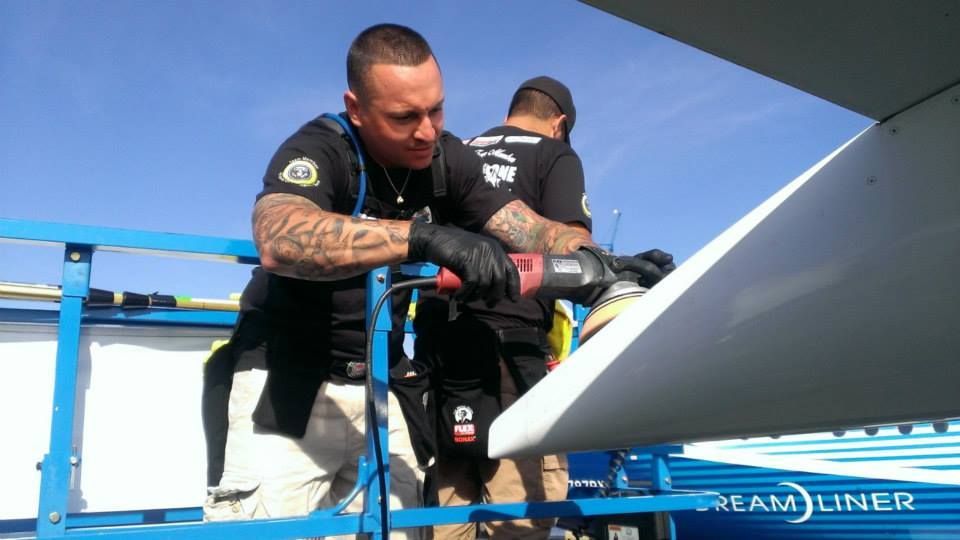
MELBOURNE DETAILER KICKS OFF INDEPENDENCE DAY AS TEAM LEADER OF 2019 AIR FORCE ONE DETAILING TEAM AT SEATTLE’S MUSEUM OF FLIGHT
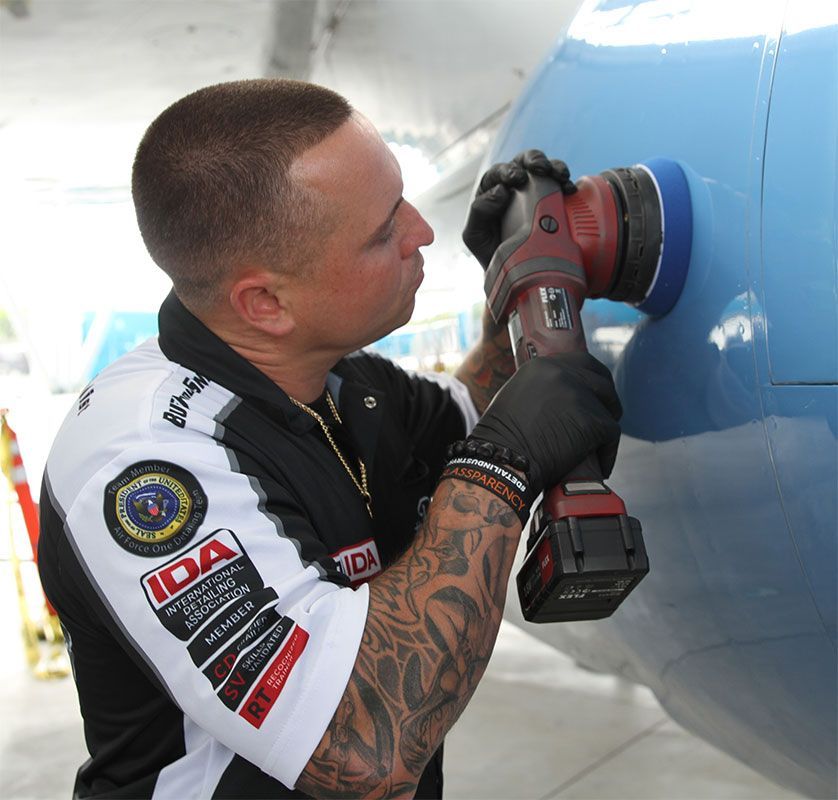
Melbourne detailer Justin “JL” Labato of JL’s Showroom Detailing will serve his 5th year on the 2019 Air Force One Detailing Team at Seattle’s Museum of Flight. This will be his 3rd year as a Team Leader.
Labato is the past president of the International Detailing Association (IDA) and a spokesperson for Buff ‘N Shine Manufacturing, one of the major sponsors of the annual event. Justin is handpicked from hundreds of detailers nationwide by the original “Detailer of Air Force One”, Renny Doyle of Detailing Success. Doyle announced this year’s 50-person team just in time for the Independence Day holiday. He will lead the weeklong project at the museum in Seattle from July 7-14, 2019.
For 16 years, members who are chosen for the exclusive Air Force One Detailing Team, volunteer their time. The feel it is their patriotic duty to restore, maintain and protect the original presidential jet, Air Force One, and more than a dozen historic aircraft currently on exhibit in the museum’s new Airpark Pavilion.
“Justin is one of the senior members of my team and is an expert at polishing paint and metal,” said Doyle. “He will still work on all of the planes this year, but he is more valuable to me as a team leader, helping coordinate this large, weeklong project, and he has the experience needed to train new team members and show them the ropes.”
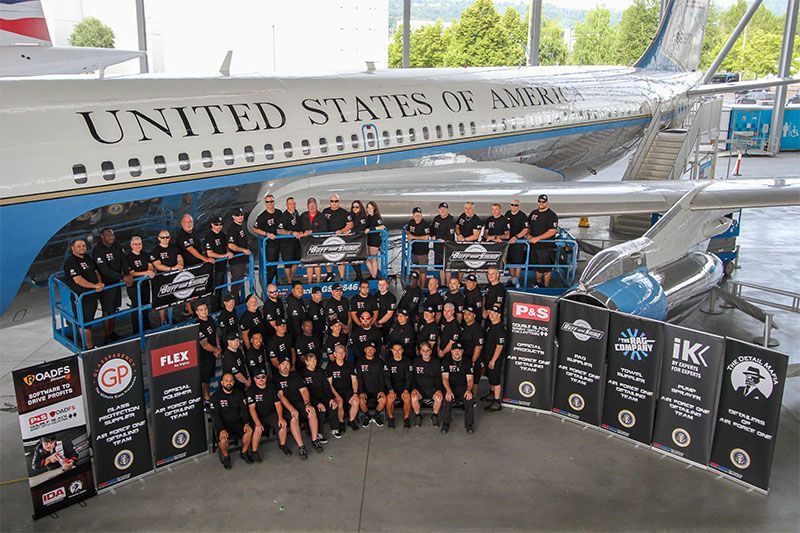
“I AM JUST AS EXCITED THIS YEAR ABOUT BEING CHOSEN FOR THE TEAM AS I WAS THE FIRST YEAR”
“I am just as excited this year about being chosen for the team as I was the first year. Every year I feel like I bring more to the table than I did the last,” says Labato. “It is always an honor to be steward and caretakers for all these iconic aircraft – especially Air Force One. I’m honored to be able to lead the team again this year and it makes the Fourth of July holiday special this year.”
In addition to Air Force One, which is currently in preservation stages after 15 years of restoration, the team will continue restoring a solid aluminum WWII B-29 Super Fortress Bomber and a recently acquired and badly deteriorating Vietnam-era B-52G Stratofortress Bomber. They will also clean and continue to maintain the first-ever Boeing “Jumbo Jet” 747; the Concorde Alpha Golf; and the first 1960s-70s-era Boeing 727-022 commercial airliner – all three, planes previous teams have begun restoring in the past 5-10 years.
AIR FORCE ONE IS THE FIRST PRESIDENTIAL JET, KNOWN AS THE “FLYING OVAL OFFICE”
Air Force One is the first presidential jet, known as a flying Oval Office for four American presidents including Eisenhower, Kennedy, Johnson, and Nixon. It entertained International dignitaries like Nikita Khrushchev and Henry Kissinger. For more than a decade, it lived on the open tarmac exposed to Seattle’s notorious climate.
In 2003, a Bush-administration executive contacted Doyle about saving the deteriorating paint and brightwork on the iconic plane. Doyle was known for his skill at paint correction and restoring the shine on classic cars, as well as his knowledge in caring for expensive car collections, exotics, and aircraft.
“That beautiful jet was in distressed condition when I first saw it in 2003 and it was just me and a couple of staff who decided there was no way we could make it look worse,” said Doyle. “There was a lot of new technology, new equipment, and innovative products coming onto the market for professional detailers that I had been field testing that since then, has been phenomenal in bringing the plane up to the excellent condition it is in now.”
Although it does not sit exposed on the tarmac, Air Force One still requires an annual cleaning because it is inside an open-air pavilion. She is covered but still subject to the dampness and cold that causes her paint and brightwork to get cloudy. The team also continues their restorative work on the other iconic planes on display.
For more information about Justin Labato’s selection to the Air Force One Detailing Team at Seattle’s Museum of Flight, contact him at (321) 722-2255 or PR representative Kimberly Ballard at (256) 653-4003.